Best Salmorejo Near Me: A UK Guide to Finding Authentic Spanish Tomato Soup
Craving a bowl of thick, chilled, deeply savoury tomato soup? If you’ve typed “best salmorejo near me” into Google, you’re chasing one of Spain’s most underrated dishes — and in the UK, it’s not always easy to find someone who makes it properly. This guide explains exactly what salmorejo is, why so many restaurants get it wrong, where you’re most likely to find a genuine version near you, and how to judge a bowl the moment it lands on your table.
What Is Salmorejo, Exactly?
Salmorejo is a cold soup from Córdoba, in the Andalusia region of southern Spain. At its core, it’s just four ingredients: ripe tomatoes, stale bread, olive oil, and garlic, blended until completely smooth and left to chill. That simplicity is deceptive — done well, salmorejo tastes rich, almost velvety, with a natural sweetness from the tomatoes and a rounded depth from good olive oil.
It’s often confused with gazpacho, but the two dishes aren’t interchangeable.
Salmorejo vs Gazpacho: The Real Difference
Gazpacho is thinner, more like a chilled vegetable drink, and usually includes cucumber, peppers, and onion alongside the tomato base. Salmorejo skips most of those extra vegetables and instead uses bread to thicken the mixture into something closer to a puree than a soup you’d sip. If a menu describes salmorejo as “light and refreshing,” that’s often a red flag — the dish should feel substantial, almost like a savoury custard, not a watery starter.
Why So Many UK Restaurants Get Salmorejo Wrong
Salmorejo has become fashionable on tapas menus across Britain over the past few years, but popularity doesn’t guarantee accuracy. There are a few common mistakes worth knowing before you order:
- Blending it too thin. Some kitchens essentially serve a tomato gazpacho and call it salmorejo, because it’s quicker and cheaper to make.
- Skipping proper bread. Authentic salmorejo relies on the right ratio of stale, dense bread to tomato. Too little bread and the texture collapses; too much and it turns gluey.
- Using out-of-season tomatoes. Since tomatoes are the entire flavour base, bland or watery ones ruin the dish no matter how it’s finished.
- Serving it warm or lukewarm. Salmorejo should always arrive properly chilled. If it’s room temperature, it almost certainly wasn’t prepared fresh that day.
Knowing these pitfalls means you can spot a mediocre version before you’ve even ordered a second spoonful.
Where to Actually Find Good Salmorejo Near You
Spanish and Andalusian Restaurants
Your best odds are always at a restaurant that specialises in Spanish or specifically Andalusian cooking, rather than a generic “Mediterranean” spot. Kitchens with a Spanish chef, or ones that lean into regional dishes from Córdoba and Seville, tend to treat salmorejo as a signature item rather than an afterthought on a long tapas list.
Tapas Bars
Tapas bars are the second most reliable option, particularly independent ones rather than large chains. Smaller tapas restaurants often run salmorejo as a seasonal or summer special, made fresh in-house because it’s cheap to produce and popular with regulars. Ask your server whether it’s made daily — most will tell you honestly if it’s a shortcut version.
Spanish Delis, Markets, and Food Halls
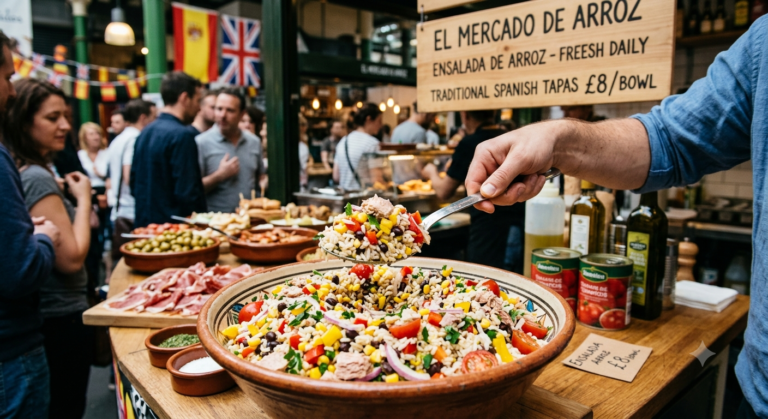
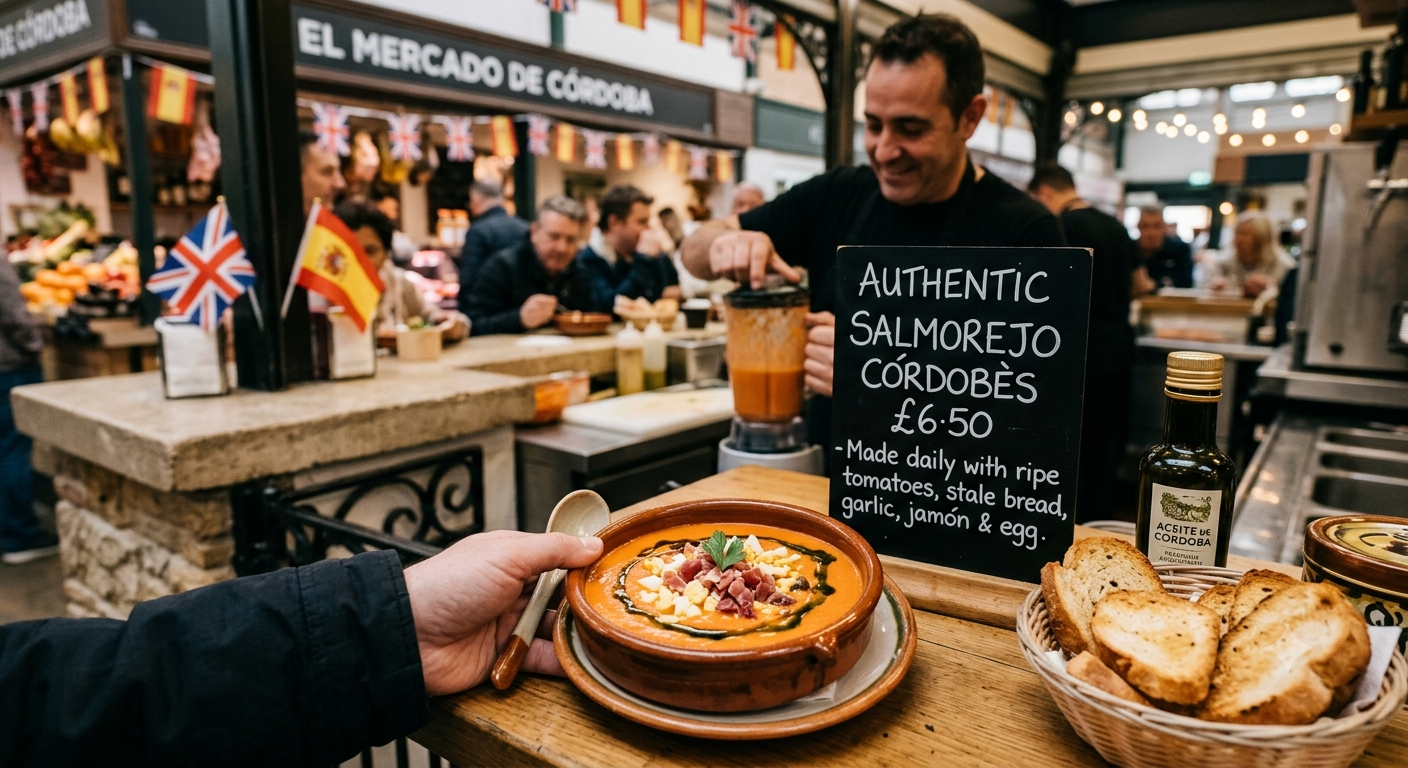
In bigger UK cities, food halls and markets increasingly host Spanish vendors selling fresh salmorejo by the cup or bowl, sometimes alongside jamón and cheese counters. These stalls often have less overhead than a full restaurant, which means the tomatoes and olive oil are frequently better quality, since the whole business depends on getting a handful of dishes right.
Independent Spanish Delis and Grab-and-Go Counters
A growing number of Spanish delicatessens now sell chilled salmorejo to take away, particularly in areas with a strong Spanish or Mediterranean community. These are worth checking even if you weren’t planning on eating in, since the soup travels well when kept cold.
How to Judge Salmorejo Before You Order
Read the Reviews Carefully
Search recent reviews specifically for the word “salmorejo” rather than trusting a restaurant’s overall star rating. Phrases like “authentic Andalusian flavour,” “properly chilled,” or “tastes just like Córdoba” are strong signals. If reviewers only mention the tapas or paella and never the salmorejo specifically, it’s probably not the dish that place is known for.
Look at the Photos
Photos reveal texture instantly. Good salmorejo should look thick, glossy, and deep orange-red — closer to a smooth puree than a juice. If photos show something pale, watery, or separated, that’s a sign of poor technique or tomatoes that weren’t ripe enough.
Check the Toppings
Traditional salmorejo is finished with diced Spanish jamón and crumbled hard-boiled egg, sometimes with a final drizzle of extra virgin olive oil. Restaurants that skip the jamón and egg, or replace them with unrelated garnishes, are usually taking creative liberties rather than serving the classic version — which isn’t necessarily bad, but it’s worth knowing what you’re getting.
What a Great Bowl of Salmorejo Should Taste Like
When it’s done properly, the first spoonful should feel cool, smooth, and slightly thick, coating the spoon rather than running off it. The tomato flavour should taste concentrated and naturally sweet rather than acidic or thin. Good olive oil adds a rounded richness without tasting greasy, and the garlic should be present but not overpowering. The jamón adds saltiness, and the egg softens the whole thing with a bit of texture. If a bowl hits all of that, you’ve found a kitchen that understands the dish — and it’s worth going back.
Frequently Asked Questions
Is salmorejo served hot or cold?
Salmorejo is always served cold. It’s traditionally eaten during warmer months in Spain as a refreshing but filling starter, and any version served warm has not been prepared or stored correctly.
Can salmorejo be made without bread?
Traditional salmorejo always includes bread, since it’s what gives the soup its thick, creamy consistency. Bread-free versions exist for gluten-free diners, but they’re a modern adaptation rather than the classic recipe.
Is salmorejo vegetarian?
The soup base itself is vegetarian, but the traditional toppings — jamón and sometimes boiled egg — are not vegan and jamón isn’t vegetarian either. Many restaurants will happily serve it without the meat topping on request.
What’s the best time of year to order salmorejo?
Salmorejo is best when tomatoes are in peak season, roughly from late spring through early autumn in the UK, since restaurants are more likely to be using ripe, flavourful tomatoes rather than out-of-season imports.
Final Thoughts
Finding the best salmorejo near you comes down to seeking out kitchens that treat it as a specialty rather than an item added just to look authentically Spanish. Prioritise Spanish and Andalusian restaurants, independent tapas bars, and Spanish delis over generic Mediterranean menus, read reviews that specifically mention the dish, and trust your first spoonful — properly made salmorejo is unmistakable once you’ve had it.